
Lancaster County, PA
Trim & Finish Carpentry
Installation and repair of baseboards, molding, window and door trim, and other interior finish work throughout Lancaster County and the surrounding areas.
What's Included
The details that make a room look built
Trim is what your eye reads as quality — tight joints, consistent reveals, and corners that meet properly. It's also the part of a project that's easiest to rush, which is why we don't.
Baseboard & molding
Installing or repairing baseboards and molding, including the corner cuts and returns that decide whether a room reads as finished.
Window & door trim
Casing for windows and doors, fitted and finished so openings look intentional rather than trimmed in as an afterthought.
Crown molding & ceiling trim
Crown and ceiling trim installed level and tight to the wall, with the joints filled and sanded before paint.
Interior door & hardware
Hanging and adjusting interior doors, plus the hinges, stops, and hardware so doors close properly and latch the way they should.
LVP & laminate flooring
Luxury vinyl plank and laminate flooring installed and finished, including the transitions and trim at the edges of the room.
Repairs & punch-list work
Replacing a damaged piece of trim, tightening up a run that's come loose, or working through a list of small interior items in one visit.
The Four Profiles
Most trim work comes down to four pieces
Nearly everything we install or repair is one of these four profiles. Knowing which one you're talking about — and how tall it is — makes the estimate conversation a lot shorter.
Baseboard
3 1/4" to 5 1/4"
The most common trim in the house and the one you notice when it's missing. It closes the gap between the wall and the floor and takes a beating from vacuum cleaners, pets, and furniture.
Most often repaired or replaced one room at a time.
Casing & door trim
2 1/4" to 3 1/2"
The trim wrapping windows and doorways. The reveal — the small even step where the jamb meets the casing — is the detail that separates a casing that looks right from one that looks off in a way you can't quite name.
Usually replaced after a door is rehung or an opening is changed.
Crown molding
3 5/8" to 5 1/4"
Ceiling trim that has to sit tight to two surfaces at once. It's the least forgiving trim to install: the corners are cut on an angle in two directions, and any gap at the top reads from across the room.
Best installed in a room before the walls are painted.
Shoe & quarter round
1/2" to 3/4"
The small profile that covers the seam between baseboard and flooring. It's the piece that lets a floor move slightly under the base without opening a visible gap.
Standard on new flooring, including LVP and laminate.
How We Work
Six things we hold to on every trim job
Trim is judged up close, by hand, and in raking light. These are the standards that decide whether finished trim holds up to that.
Every joint between two pieces is cut to meet, glued, and filled. When the trim is painted you should not be able to find where one piece ends and the next begins — even running your hand along it.
The step where casing meets jamb should be the same width all the way around every opening in the room. A reveal that drifts by an eighth of an inch is the single most common thing that makes a room feel slightly unfinished.
Inside and outside corners are cut and fit, not filled. Walls are rarely square, so this is done by measuring the actual angle rather than assuming 90 degrees — which is why the corners hold.
A taller baseboard in a room with high ceilings, a slightly heavier casing on a wide opening. Trim that's undersized for the space reads as an afterthought; trim that's oversized crowds it.
Nail holes filled, joints sanded smooth, and the surface wiped down before we leave. The trim is ready for a finish coat the moment the painter arrives, with no prep left behind.
The line where trim meets wall gets caulked; the line where it meets floor or another piece of trim usually doesn't, so the trim can move with the seasons without cracking out.
Typical Projects
What a trim job usually looks like
Trim work is rarely one thing. A door gets rehung and the casing has to come off with it; new flooring means new shoe molding; a repair turns up baseboard that was never installed to begin with. Here's how the four most common jobs usually go.

Replacing baseboard in one room
Pulling the old base, dealing with whatever the wall looks like underneath, and running new base with the corners coped and the ends returned. Usually a day for a standard room, longer if the walls need patching first.
Trimming out a new window or door
Building the jamb out to the finished wall thickness, fitting the casing with a consistent reveal, and finishing it ready for paint. This is the job that most often gets left half-done by whoever did the rough-in.
Hanging or rehanging interior doors
Setting a door so it swings freely, closes against the stop, and latches without lifting. A door that binds, drags, or needs to be lifted to latch is almost always a hinge and alignment problem, not a door problem.
LVP & laminate flooring
Vinyl plank and laminate laid over a prepared subfloor, with the expansion gap, transitions, and shoe molding that the installation actually requires. The trim is part of the job, not an afterthought.
Common Questions
Matching, timing, and materials
Usually, yes. Most homes use one of a handful of standard profiles, and we can identify what you have and either match it or find the closest current equivalent. If an exact match isn't available any more — common in older homes — we'll tell you before we start and walk through the options, which are usually to replace the trim in the whole room so it matches itself, or to keep the new piece as close as we can get it.
We can do either. We do interior painting, so we're happy to install the trim and finish it ourselves, and many customers have us handle both because it means one contractor owns the finished result — no seam between the carpenter's work and the painter's. If you'd rather use your own painter, we leave the trim sanded, filled, and ready for them.
No. Smaller trim projects are a large part of what we do, and they're the reason the business exists. A single room, a door that needs rehanging, or trim around one window is a normal job for us — not something we'll try to talk you out of or pad into something larger.
A standard room of baseboard is usually a day. A full house's worth of trim is measured in days, not weeks. Windows and doors take longer per opening than baseboard because of the jamb and reveal work. We'll give you an honest sequence and timeline at the estimate, and we don't leave a room half-trimmed overnight if we can avoid it.
Luxury vinyl plank is waterproof and stands up better to moisture, which is why it's the usual choice for kitchens, bathrooms, and basements. Laminate is a wood-composite core with a photographic top layer — it looks closer to real wood and feels firmer underfoot, but it swells if standing water gets into the seams. Both install over a prepared subfloor with a small gap at the walls. We'll tell you which makes more sense for the room you're doing.
Finish Work
Small trim jobs are still worth doing well
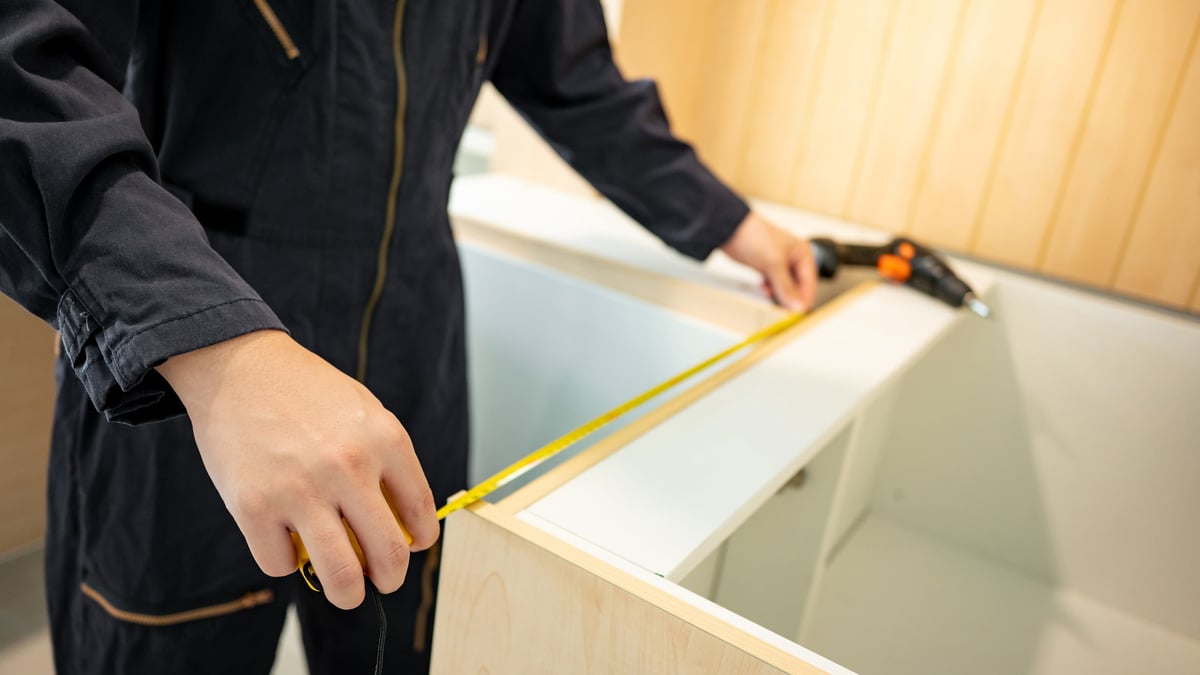
A single room's worth of baseboard, a door that needs rehanging, or trim around a window that was never finished — these are the projects many larger contractors won't take on. We will, and we take the same care with them.
- Clear scope and pricing before any work begins.
- Joints filled, sanded, and ready for paint when we finish.
- We protect your floors and clean up after the work is done.
Related Work
Other interior work we handle
Trim almost always comes with paint or drywall work alongside it. Here's what else we take on.
Have a trim or finish project in mind?
Request a free, no-obligation estimate and we'll visit your home to review the work — including the small jobs.